
Industrial Building Facade Cleaning Drone: Cost & Risk Reduction for Commercial Maintenance
Industrial Building Facade Cleaning Drone: Cost & Risk Reduction for Commercial Maintenance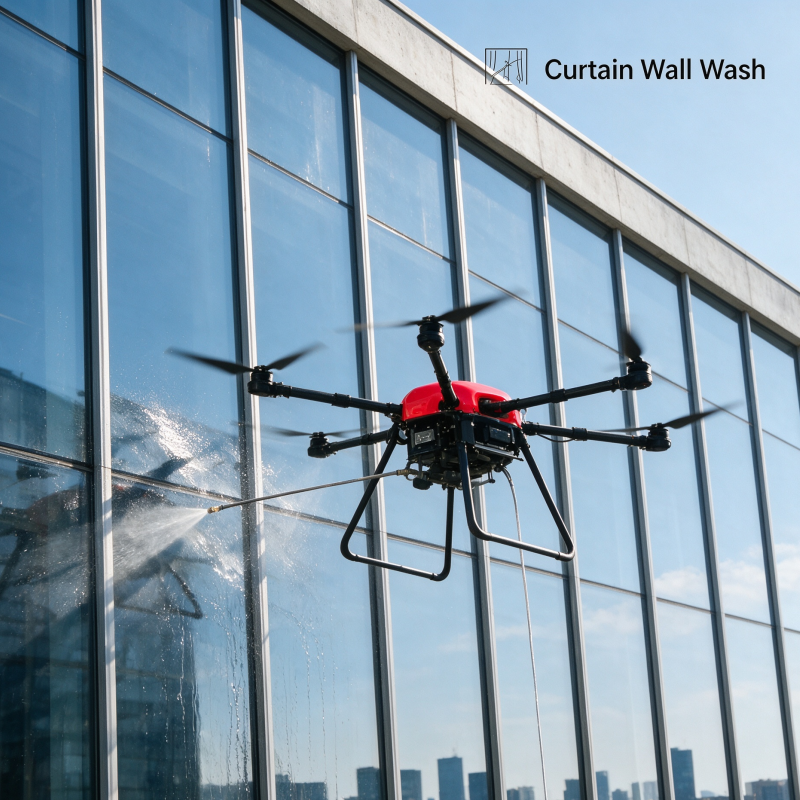
For commercial cleaning contractors, facility management firms, and industrial property owners, high-rise facade maintenance remains one of the most resource-intensive and liability-heavy service segments. Traditional cleaning methods relying on rope access, suspended platforms, and scaffolding continue to drive rising labor costs, safety violations, and inconsistent project quality.
As global safety regulations become stricter and operational overheads increase, industry professionals are shifting toward automated solutions to standardize exterior maintenance workflows. The industrial building facade cleaning drone has emerged as a reliable, scalable, and cost-efficient alternative for high-rise glass, exterior wall, and commercial facade cleaning projects.
Industry Challenges in Traditional Facade Maintenance
Commercial building owners and cleaning companies face three core bottlenecks when managing high-rise facade cleaning:
High operational liability High-altitude manual work is classified as high-risk construction in most regions. Wind interference, slippery surfaces, and complex building structures increase the probability of safety incidents, resulting in higher insurance premiums, project suspensions, and legal compensation risks.
Unstandardized cleaning quality Manual cleaning results depend entirely on worker experience. Inconsistent water pressure, unstable operating distances, and missed blind spots often lead to streaks, residual dirt, or coating damage, requiring frequent rework and reducing client satisfaction.
Escalating labor and project costs Skilled high-altitude workers are difficult to recruit and expensive to retain. Scaffolding setup, safety training, and long construction cycles further lower profit margins for large-scale facade projects.
How Industrial Facade Cleaning Drones Standardize Commercial Maintenance
An industrial building facade cleaning drone is purpose-built for professional commercial and industrial exterior maintenance. Unlike consumer-grade drones designed for basic aerial filming, this industrial platform integrates adaptive high-pressure water systems, anti-wind stabilization mechanisms, and fixed-distance intelligent hovering technology to deliver repeatable, project-grade cleaning results.
The system supports both manual fine-tuning and preset autonomous route operation. Operators can mark cleaning boundaries on the ground, allowing the drone to execute automatic cruising and uniform pressure washing across large facade areas. This structured working mode eliminates human error and ensures consistent cleaning coverage for glass curtain walls, painted exterior walls, curved building surfaces, and structural gaps.
Equipped with intelligent pressure adjustment modules, the drone adapts water flow according to surface materials. It delivers strong hydraulic power to remove industrial dust, oxidation layers, rain stains, and accumulated grime while maintaining safe pressure levels to protect glass coatings, wall paint, and exterior decorative materials.
Core Business Advantages for B2B Buyers
1. Eliminate High-Altitude Safety Liabilities
The drone completes all high-rise cleaning tasks without manual aerial operation. Ground-controlled workflows significantly reduce safety risks, helping cleaning companies comply with modern construction safety standards and qualify for high-end commercial and government bidding projects.
2. Improve Project Standardization & Client Retention
Automated fixed-distance cleaning ensures uniform, streak-free, damage-free results for every project. Standardized service quality enhances brand professionalism, reduces after-sales disputes, and supports long-term facility maintenance contracts with hotels, office towers, and commercial complexes.
3. Increase Project Efficiency & Service Capacity
Drone-based cleaning covers large facade areas 3–5 times faster than traditional manual teams. It enables contractors to take more projects within the same cycle without expanding labor teams, effectively increasing overall business revenue and market competitiveness.
4. Reduce Long-Term Operational Expenses
Investing in an industrial cleaning drone cuts recurring costs including high-altitude labor, scaffolding rental, safety equipment maintenance, and post-project repair compensation. Most professional cleaning teams achieve stable ROI within 6–12 months.
Applicable Commercial Scenarios
The industrial facade cleaning solution is widely adopted in high-standard commercial maintenance scenarios:
-
High-rise office building glass curtain wall maintenance
-
Hotel, mall, and commercial complex exterior cleaning
-
Industrial factory high-wall and facility washing
-
Special-shaped and curved building facade upkeep
-
Government and public building regular maintenance projects
Conclusion
As the commercial cleaning industry shifts toward automation and standardized management, traditional high-risk manual facade cleaning is gradually being phased out. An industrial building facade cleaning drone provides B2B buyers with a safer, more efficient, and cost-effective maintenance solution, helping professional cleaning companies and property management teams upgrade service capabilities, reduce operational risks, and achieve sustainable business growth.